Amazon
English digital edition of The Human OS Manual on Kindle.
Available October 15, 2026
Why Self-Improvement Fails When You Ignore the System Underneath
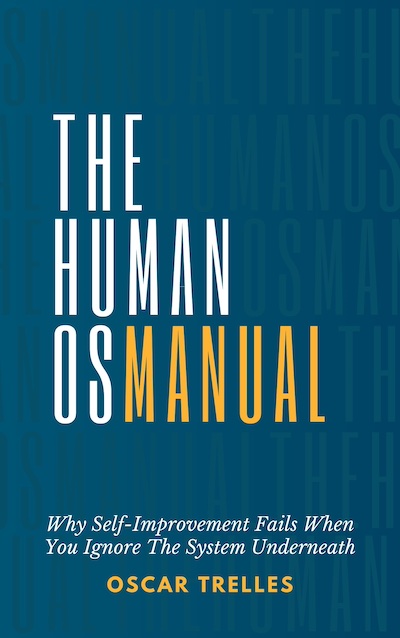
You are not broken. You are running a system you were never taught to understand.
Most self-improvement treats sleep, stress, productivity, food, relationships, health, and aging as separate problems. This book shows how they interact, why familiar fixes stop holding under pressure, and how to build a life your biology can actually sustain.
English digital edition available for preorder.
The book is for people who recognize some version of this:
The Human OS Manual starts with a different question: what if the visible problem is an output of the conditions underneath it?
The Human OS Manual connects energy, attention, state, recovery, behavior, relationships, environment, adaptation, and healthspan in one operating context. The aim is not to optimize every variable. It is to make the interactions legible enough that you can see what is driving what, where change is most likely to hold, and when adding another intervention is the wrong move. Explore the Human OS architecture.
This is not a protocol for perfect sleep, a productivity system, a biohacking stack, or a set of rules for becoming a better version of yourself. It does not ask you to manage your life as a dashboard.
It is a manual for understanding the operating conditions underneath your efforts, so you can stop treating connected problems as separate projects.
The aim is not constant improvement. It is greater coherence.
Early reader reviews
The Human OS Manual is a thoughtful and timely exploration of the aging process, grounded in the realities of modern life. Oscar Trelles makes a compelling case that the way we structure our days, recover from stress and respond to our environment can play a meaningful role in extending healthy lifespan.
In the world
The book is beginning to exist outside its own website through independent catalogues, reader platforms, and public conversations.
Independent conversation
On Live Long, Peter Bowes and Oscar Trelles discuss the book through recovery, resilience, daily rhythm, modern life, and healthy longevity.
Reader discovery
An independent book record with reader activity, reviews, and Oscar Trelles’s author profile.
Edition metadata
Independent retailer records now carry the paperback and hardcover editions, including publisher, ISBN, publication date, and print metadata.
The English digital edition is available for preorder through selected retailers.
English digital edition of The Human OS Manual on Kindle.
Paperback and ebook available for pre-order on Barnes & Noble.
Pre-order the ebook on Apple Books.
Pre-order the ebook on Google Play.
Also listed on StoryGraph, BookBub, and Google Books.
Launch updates, selected excerpts, and essays leading up to publication.
Published through the Human OS Manual on Substack.
The essays develop one Human OS lens at a time. The book holds the full architecture.
Why behavior change becomes fragile when operating conditions stay the same.
Why more health data does not automatically create a changed trajectory.
What happens when external capability accelerates faster than human capacity.
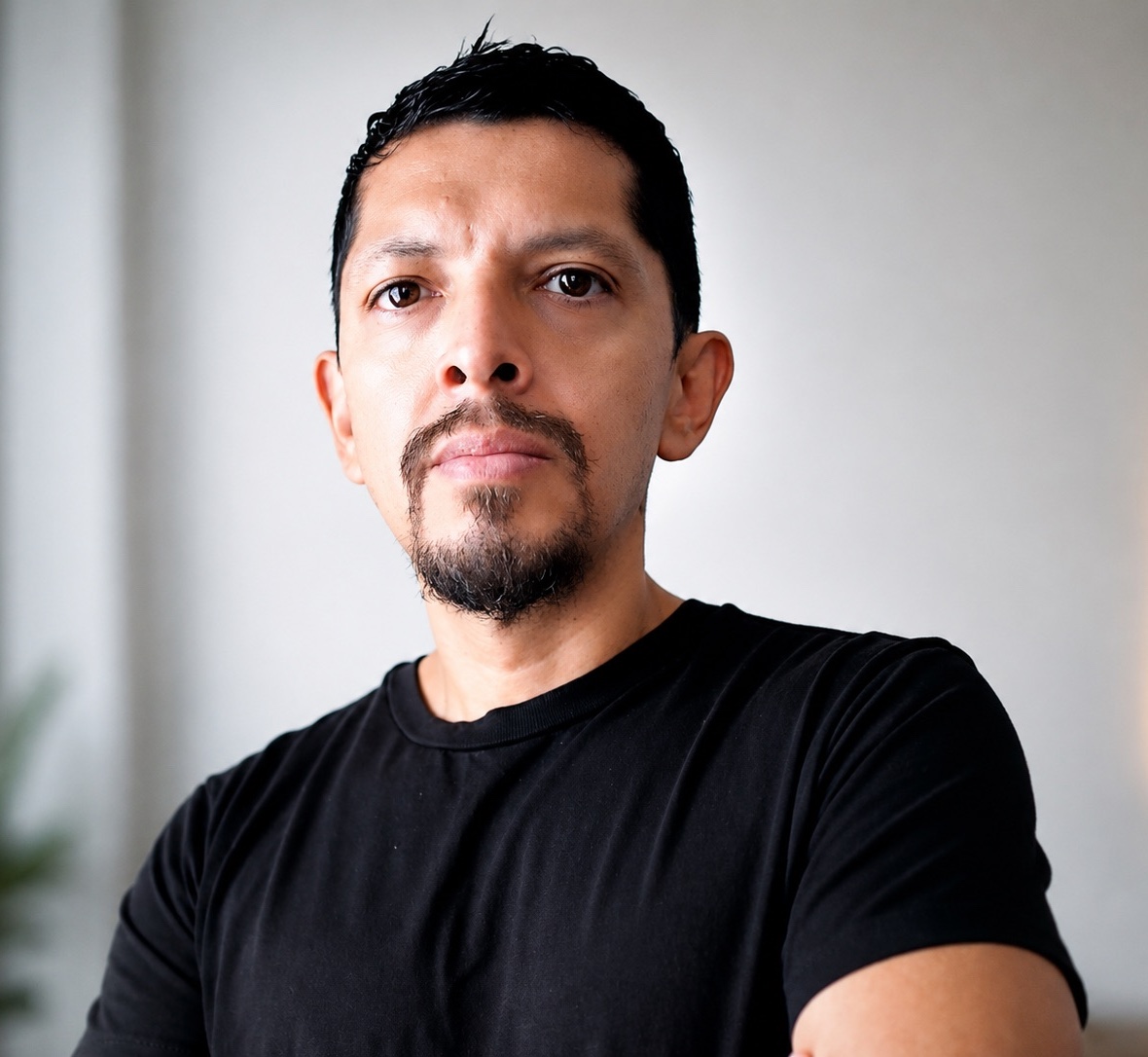
Oscar Trelles spent more than two decades studying how people behave inside systems built for attention, performance, trust, and change, across advertising, strategy, market research, technology, cybersecurity, entrepreneurship, and commercial leadership.
After severe burnout, he spent fifteen years rebuilding his health, resilience, and operating rhythm. The Human OS Manual grew from the continuity between those two periods: the same systems inquiry, brought closer to physiology, recovery, behavior, adaptation, environment, and healthspan.
Read full bioThe Human OS Manual is a systems manual for people who want to live in a way their biology understands.
By Oscar Trelles · Published by Ten & Walker Press · Available October 15, 2026