OEB Insights
Why AI Capability Requires Human Capacity
The published argument for treating employee wellbeing, judgment, agency, and recovery as part of the operating infrastructure surrounding AI adoption.
Oscar Trelles speaks about the operating conditions that shape human capacity: how people sustain judgment, recovery, adaptation, and performance inside increasingly capable systems.
His talks translate the Human OS framework into practical questions for leaders, organizations, and individuals.
UPCOMING AT OEB 2026
OEB helped clarify the question that became The Human OS Manual: what happens when the capability of our tools grows faster than the capacity of the people using them?
In 2026, the work returns to Berlin in three connected forms: a published argument, a live application of the Human Capacity Map, and an official conversation around the book.
OEB 2026 · Berlin · 2–4 December 2026
OEB Insights
The published argument for treating employee wellbeing, judgment, agency, and recovery as part of the operating infrastructure surrounding AI adoption.
Learning Café
Thursday, December 3, 2026 · 16:30–17:30 · Berlin local time
A limited-capacity facilitated session using the Human Capacity Map to examine what AI makes easier, what people must remain capable of doing, and what may need to change in the way work is organized.
Meet the Author
Friday, December 4, 2026 · 11:15–11:45 · Berlin local time
An informal conversation about the ideas behind the book, the operating system underneath sustainable performance, and the questions that become more urgent as AI expands organizational capability.
Two central talks bring the Human OS framework into the questions organizations and individuals are already trying to solve.
Why Self-Improvement Fails When You Ignore the System Underneath
Most attempts at change target one visible problem at a time. Sleep, stress, focus, food, performance, and recovery are treated as separate categories even though they emerge from one interacting system.
This keynote introduces the Human OS and shows why lasting change begins with the operating conditions producing the pattern.
Best for: Leadership, human performance, workplace wellbeing, healthspan, and general audiencesFormat: 35–60 minutes
AI can expand what an organization can accomplish almost immediately. It does not automatically expand the attention, judgment, agency, learning, or recovery available to the people responsible for using it well.
This keynote examines the difference between technological capability and retained human capacity, where the productivity surplus goes, and why sustainable AI adoption is also a work-design question.
Best for: HR, L&D, responsible AI, future of work, organizational development, and leadershipFormat: 30–45 minutes
Facilitated formats help participants apply the framework to real workflows and organizational decisions.
A facilitated examination of one AI-enabled workflow.
Participants identify what technology makes easier, what people must remain independently capable of doing, which operating conditions influence that capacity, and what the organization could change.
Best for: Cross-functional groups, HR and L&D teams, AI adoption programs, and conference Learning CafésFormat: 60–90 minutes
An executive briefing for leaders making decisions about automation, augmentation, accountability, and workforce capability.
The session helps leaders distinguish tasks that can be automated from the human capacities that must remain available when technology is wrong, incomplete, unavailable, or contested.
Best for: Executive teams, boards, transformation leaders, and AI governance groupsFormat: 45–60 minutes
An informal conversation about how a systems inquiry spanning technology, behavior, physiology, recovery, environment, and adaptation became a book.
The discussion can explore the framework itself, the writing process, the personal experience behind it, or its implications for work, leadership, and modern life.
Best for: Literary events, podcasts, professional communities, book clubs, and partner-hosted conversationsFormat: 30–60 minutes
Talks and conversations can also be adapted around selected themes from the book.
Sleep, stress, work, relationships, and recovery as one living system, not separate problems with separate fixes.
Why improving one part while weakening the whole is the hidden cost of modern performance culture.
Regulation, rhythm, and recovery as leadership infrastructure, not personal wellness.
Healthspan as stewardship of load, adaptation, and operating conditions, not anti-aging hype.
30–60 minutes
60–90 minutes
45–60 minutes
30–60 minutes
Half-day by arrangement
Available for organizer-hosted conferences, leadership meetings, organizational programs, podcasts, and book events.
For public events, the host manages venue, registration, ticketing, promotion, and production.
Loading events…
Independent interviews and discussions exploring ideas connected to the Human OS. These are conversations, not reviews of the book.
Why Your Success is Taxing Your Nervous System
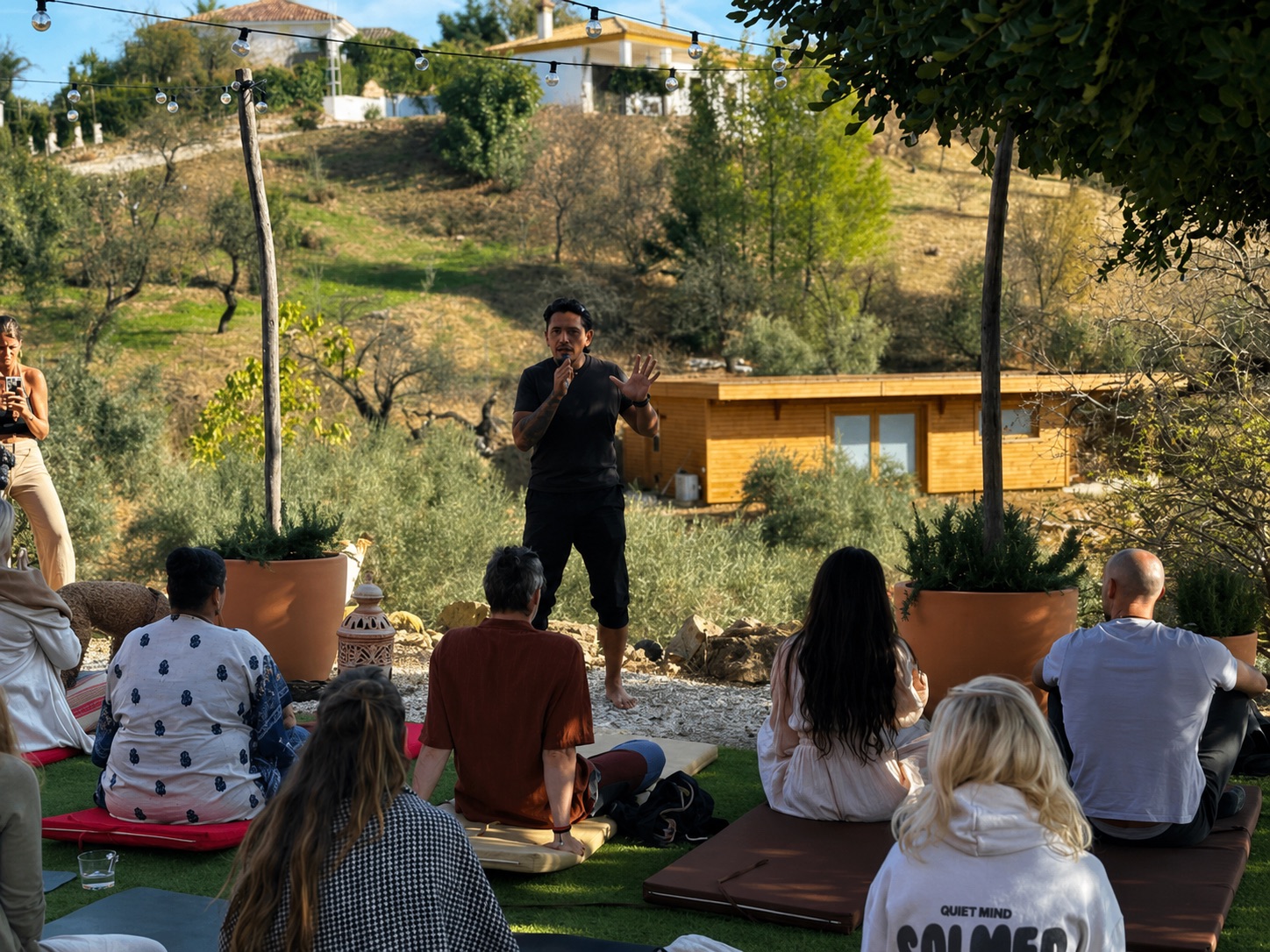
Book conversations and talks in rooms where the ideas can land.
Outdoor session, Spain
Oscar Trelles is the author of The Human OS Manual. He brings more than two decades across technology, strategy, market research, cybersecurity, entrepreneurship, and global commercial leadership to conversations about how operating conditions shape human capacity, judgment, recovery, behavior, and adaptation.
Download Oscar’s speaker one-sheet with signature talks, applied sessions, formats, and background.
Oscar is available for hosted conferences, leadership meetings, organizational programs, podcasts, and partner-hosted book conversations.
For Oscar’s wider speaking, media, interviews, external writing, and author profile: